
Local truck drivers are a critical component of the U.S. supply chain. They operate within regional boundaries, often returning home at the end of each shift, and serve as the backbone of urban logistics and regional freight fulfillment. Their work ensures that goods move from distribution centers to retail locations, warehouses, or directly to consumers efficiently and reliably.
Since the COVID-19 pandemic, labor patterns in the transportation sector have shifted. Many drivers now favor local routes over long-haul positions. This change is driven by a desire for more predictable hours, family time, and improved work-life balance. In turn, this trend has reshaped the logistics industry, increasing the demand for local drivers to support ecommerce growth and last-mile delivery operations.
Urban areas especially rely on local drivers to meet the fast-paced demands of last-mile logistics. Whether it’s delivering packages for major retailers or transporting inventory between local hubs, local truck drivers now play an increasingly vital role in keeping supply chains responsive and adaptive to consumer needs.
- Defining Local Truck Driving
- Common Sectors Employing Local Drivers
- Job Market Trends and Labor Statistics (2024–2025)
- Key Advantages of Local Truck Driving
- Challenges Facing Local Truck Drivers
- Industry Demand Drivers for Local CDL Talent
- Licensing, Regulation, and Certification
- Employer Types and Business Models
- Preparing for a Career in Local Truck Driving
- Conclusion
Defining Local Truck Driving
Key Characteristics
Local truck driving is defined by several distinguishing factors that set it apart from regional and long-haul operations.
One of the key characteristics is a daily return-to-home schedule. Local truck drivers typically complete their routes within a single workday, allowing them to return home at the end of each shift. This is a major advantage for drivers seeking work-life balance.
Another defining feature is the radius of travel, which usually falls under 150 air miles from the driver’s home terminal. This limit aligns with certain Department of Transportation (DOT) regulations and often exempts drivers from requirements like maintaining daily logs under specific conditions.
The types of vehicles used in local truck driving also differ from those used in long-haul transport. Common vehicle types include straight trucks, day cabs, and box trucks. These vehicles are better suited for short-haul routes and frequent stops, often found in urban and suburban driving environments.
Common Sectors Employing Local Drivers
Local truck drivers find employment across a variety of industries that rely on timely and consistent ground transport within a confined geographic area.
Grocery and food distribution is one of the most active sectors, where drivers deliver perishable goods from warehouses to retail locations on strict schedules.
Parcel and last-mile delivery companies depend heavily on local drivers to bring packages directly to consumers, especially in the age of e-commerce.
In retail replenishment and warehousing, local drivers are responsible for transporting inventory loads between distribution centers and storefronts.
The construction and raw material hauling industry needs local drivers to move supplies such as sand, gravel, and equipment to and from job sites—often multiple times a day.
Finally, local third-party logistics (3PL) contractors employ drivers to handle outsourced transport needs for companies lacking their own delivery fleets.
Job Market Trends and Labor Statistics (2024–2025)
Employment Outlook
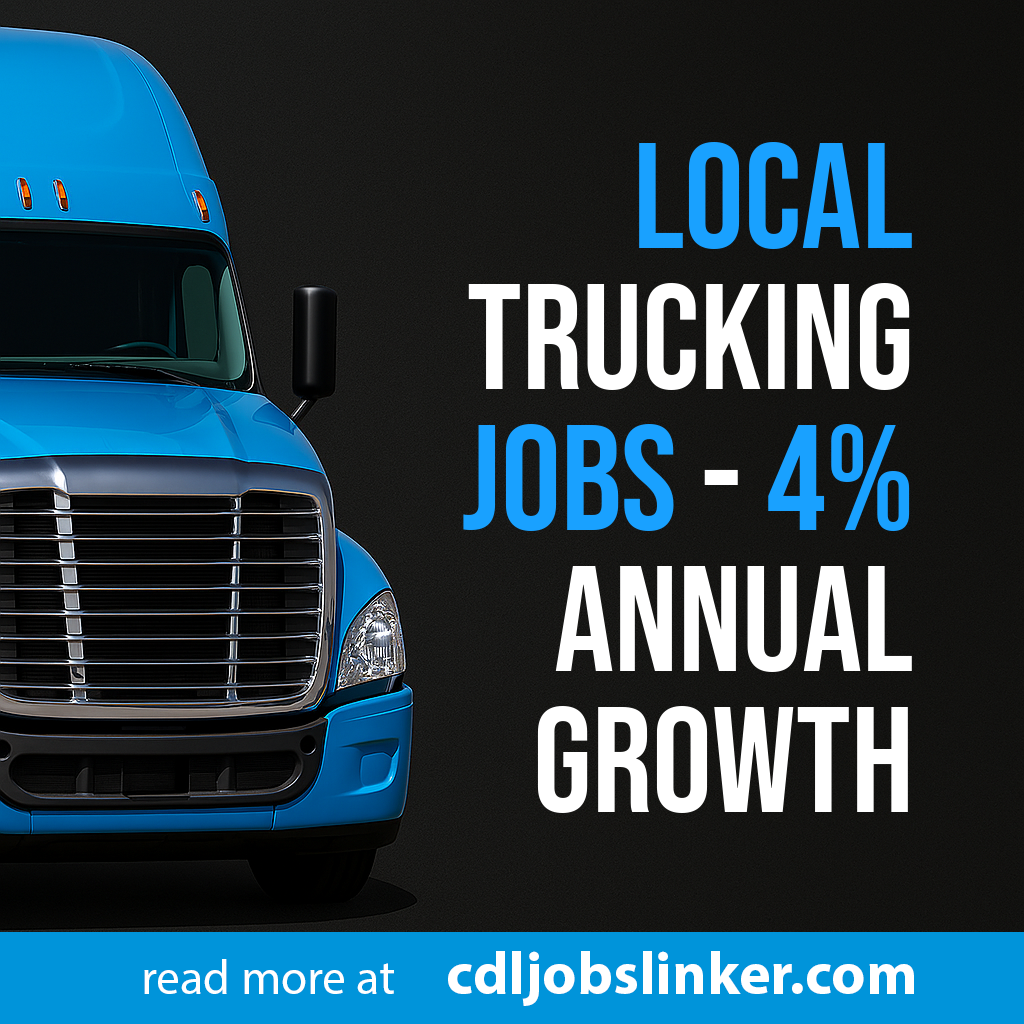
As of early 2024, the U.S. trucking sector employed over 1.6 million heavy and tractor-trailer truck drivers, highlighting the industry’s significant role in the national economy (BLS). Looking ahead, local driver jobs are expected to grow at a rate of 4% annually through 2025, outpacing the growth of long-haul positions (FMCSA). This trend reflects both evolving industry logistics and shifting demand for quicker, localized freight delivery services.
Driver Preferences Are Shifting
Driver preferences are evolving as well. In Q1 of 2024, 72% of surveyed Commercial Driver’s License (CDL) holders expressed a preference for local routes over regional or over-the-road (OTR) roles, primarily citing work-life balance as a key factor (ATA). Among younger drivers—those under 30 years old—this trend is even more pronounced, with 83% indicating a preference for local or dedicated routes (Drive Research).
Wage Trends and Comparisons
In 2024, local truck drivers earn a median annual salary of $57,400, with an average hourly rate of $27.60—a year-over-year increase of 8% (Indeed). While over-the-road drivers have a higher median salary of $65,400, this comes with longer hours and extended time away from home. These trade-offs are influencing the growing appeal of local driving positions among today’s CDL workforce.
Key Advantages of Local Truck Driving
Lifestyle and Schedule Benefits
One of the primary advantages of local truck driving is the improved lifestyle and predictable schedule it offers. Drivers typically return home at the end of each shift, which significantly enhances personal well-being and contributes to higher job satisfaction. This daily home time also supports better work-life balance, leading to improved driver morale and increased retention rates among employers.
Shift predictability is another major benefit. Local routes often follow consistent patterns, helping drivers plan their personal lives more effectively. This regularity is especially valuable for individuals with families or other obligations outside of work.
Moreover, local driving positions often allow for flexible work arrangements. Part-time roles and flexible scheduling options are more commonly available, attracting individuals who seek non-traditional working hours or a reduced workload.
Health and Safety Considerations
Local truck driving typically involves shorter routes, which directly impacts safety and health. Shorter hauls help minimize fatigue, a leading factor in trucking accidents. According to the National Highway Traffic Safety Administration (NHTSA), local route drivers average about 8.2 hours on the road per day, compared to 11.4 hours for over-the-road (OTR) drivers. The reduced driving time lowers exposure to risk and supports safer trip completion rates.
Local drivers also benefit from improved access to healthcare facilities, fresh food options, and rest facilities. Since they operate within a confined geographic area, it’s easier for them to find services to support their well-being. This accessibility promotes healthier lifestyles and allows for quicker response in case of medical issues.
Entry-Level Accessibility
Local truck driving often serves as a practical entry point for individuals new to the industry. Many local positions are open to recent Commercial Driver’s License (CDL) graduates, enabling faster workforce entry.
Unlike long-haul jobs that may require extensive orientation or weeks-long training programs, local driving positions frequently offer shorter, location-specific training. This approach eases the transition from the classroom to the highway.
Additionally, the demand for local drivers is typically higher in metropolitan and suburban areas. This concentration of opportunities makes it easier for new drivers to find employment close to home, reducing the need for relocation or extended travel during the job search.
Challenges Facing Local Truck Drivers
Compensation and Hours
Local truck drivers often face lower earning potential compared to their long-haul counterparts. Because most local positions pay by the hour rather than by mileage or completed deliveries, earnings can fluctuate due to route delays, traffic, or extended loading and unloading times. While hourly rates have seen nominal increases in recent years, workers’ real wages have remained stagnant. When adjusted for the Consumer Price Index (CPI), compensation gains between 2022 and 2024 have effectively been neutralized by inflation (Bureau of Labor Statistics).
Urban Congestion and Route Complexity
Navigating dense urban areas poses its own set of challenges for local drivers. According to the Federal Highway Administration, local drivers can spend up to 21% of their working hours stuck in traffic congestion (FHWA). In addition to traffic, complex delivery locations like narrow alleys, downtown loading docks, and residential streets require advanced driving skills and increase the time needed to complete stops.
Physical Demands and Customer Interaction
Unlike some long-haul roles, local delivery often involves manual handling of freight. Food service, beverage distribution, and retail deliveries commonly require drivers to unload goods themselves, which increases fatigue and risk of repetitive strain injuries. The high frequency of stops adds to the physical toll. Additionally, local drivers interact more regularly with store managers, kitchen staff, and homeowners, necessitating effective communication and customer service skills as essential parts of the job.
Industry Demand Drivers for Local CDL Talent
Surge in E-commerce and Last-Mile Delivery
E-commerce continues to reshape the logistics landscape. Projections show that its share of U.S. retail sales will reach 26.5% by the end of 2025, according to the U.S. Census Bureau. This sustained growth exerts pressure on delivery networks, especially for fast, localized delivery services that rely on commercial drivers with CDL licenses.
Last-mile delivery has seen a marked expansion in both volume and scope. Since mid-2023, last-mile carriers have increased hiring of non-OTR (over-the-road) drivers by 23%, based on data from CBRE Logistics. This hiring trend reflects the need for drivers who can handle regional routes and urban delivery demands where speed and flexibility are critical.
Regional Freight Realignment
Another key driver of local CDL talent demand is the realignment of freight distribution to be closer to consumers. Companies are investing in micro-fulfillment centers near densely populated areas to cut delivery times and improve efficiency. This localization strategy increases the need for local and regional drivers rather than long-haul operators.
Certain regions are becoming transportation hubs due to these logistical shifts. Cities such as Kansas City, Columbus, and Memphis—often referred to as “inland ports”—are experiencing notable increases in freight volume. This, in turn, has created higher demand for CDL-A and CDL-B drivers who can support expanded regional operations. In fact, 56% of less-than-truckload (LTL) fleet operators cited the need for more local CDL-A and B drivers in Q2 2024, according to a TT News Survey.
Licensing, Regulation, and Certification
Required Credentials
Local truck drivers must hold a valid Commercial Driver’s License (CDL), typically Class A or Class B, depending on the type of vehicle being operated and the nature of the freight. Class A is generally required for operating vehicles with a gross combination weight rating (GCWR) of 26,001 pounds or more, including a towed unit weighing over 10,000 pounds. Class B covers single vehicles with a GCWR of 26,001 pounds or more, or such vehicles towing a unit weighing less than 10,000 pounds.
All drivers are also required to pass a Department of Transportation (DOT) physical examination, which evaluates overall health, vision, hearing, and any conditions that could impair safe driving. Successfully passing this exam results in the issuance of a medical certificate, which must be kept valid and carried at all times.
Even for short-haul routes, drivers must comply with the Federal Motor Carrier Safety Administration (FMCSA) Hours of Service (HOS) rules. These regulations limit driving hours and mandate rest periods to reduce fatigue and improve road safety.
Special Endorsements and Local Skillsets
Depending on the type of materials transported, local truck drivers may need additional endorsements on their CDL. Common endorsements include air brakes (required for operating vehicles equipped with air brake systems), tanker endorsements (for transporting liquids in bulk), and hazardous materials (HAZMAT) endorsements for carrying substances classified as dangerous. Each endorsement requires additional written tests and, for HAZMAT, a background check by the Transportation Security Administration (TSA).
Local drivers also benefit from strong knowledge of regional traffic laws, road conditions, and infrastructure. Familiarity with local delivery restrictions, peak traffic hours, and weather-related challenges enhances efficiency and safety. These localized skills are especially important in urban environments, where tight streets and delivery schedules demand precision driving and strong logistical awareness.
Employer Types and Business Models
Common Employers of Local Drivers
Local drivers are employed by a range of organizations that reflect diverse transportation needs and freight patterns. One common employer type is private fleets, which are operated by companies such as grocery chains and large retailers to handle their own product distribution. These fleets often provide predictable schedules and fixed routes.
Another major employer group is for-hire carriers, which transport freight for various clients. These carriers range from large national firms to smaller regional operators and may offer dedicated or flexible scheduling options.
Freight brokers and third-party logistics (3PL) firms also hire local drivers. These companies act as intermediaries, connecting shippers with carriers and frequently managing last-mile delivery services.
Finally, government and municipal operators—such as city public works departments or postal services—employ local drivers for services including waste removal, road maintenance, and mail delivery. These positions often offer stable employment and standardized work hours.
Growth of Dedicated and Home-Daily Fleets
There has been a notable shift in the trucking industry toward expanding dedicated and home-daily fleet services. According to CCJ Market Trends, 43% of major U.S. carriers plan to allocate more trucks to local or dedicated segments through 2025. This change reflects rising demand for regular delivery schedules and the industry’s effort to improve driver retention by supporting better work-life balance.
Role of Technology and Fleet Efficiency
Technology plays an increasing role in improving the efficiency of local fleet operations. Route optimization software has been shown to reduce idle time by 17% in local driving applications by streamlining delivery routes and minimizing traffic-related delays.
Many urban and local fleets are also leading the adoption of electric vehicles (EVs) and alternative fuel options. These technologies help reduce emissions and are more practical for short-haul routes due to the limited range needs. As noted by ACT Research, the transition to electric and low-emission vehicles is most active in densely populated and regularly traveled urban settings, aligning well with the operational nature of local drivers.
Preparing for a Career in Local Truck Driving
CDL Training and Schooling Options
To begin a career in local truck driving, the first step is obtaining a Commercial Driver’s License (CDL). Training for a CDL is available through several avenues, including community colleges, dedicated CDL academies, and employer-sponsored programs. Each option comes with its own schedule, costs, and benefits.
Community colleges often offer CDL training as part of their continuing education or technical programs. These courses usually take several weeks to complete and may offer financial aid to eligible students. CDL academies, on the other hand, are specialized institutions focused solely on commercial driving. They tend to have shorter programs with more intensive training.
Employer-sponsored CDL programs are becoming more common. In these programs, a trucking company covers the cost of your training in exchange for a commitment to work for them after completion. This can significantly reduce or eliminate upfront expenses.
The average cost of CDL training ranges from $4,500 to $7,000. However, tuition reimbursement programs offered by many carriers can offset this cost, making training more accessible to those entering the field.
Onboarding and Safety Training
After completing CDL training, drivers typically go through onboarding and additional safety instruction with their employer. Modern onboarding processes increasingly simulate real-world experiences, such as city driving scenarios and customer interaction exercises, better preparing drivers for the challenges of local routes.
In addition to traditional safety education, many local fleets now incorporate advanced technology into their training modules. Safety tech such as dash cams, lane departure warning systems, and collision avoidance tools are now standard features in many trucks. Training new drivers on how to use these systems is a key focus during onboarding. This emphasis on technology not only helps prevent accidents but also provides valuable data to improve overall fleet safety.
Conclusion
Local truck driving continues to be a vital part of the U.S. freight economy. As e-commerce and last-mile delivery expand, the demand for skilled local CDL drivers is only set to increase. Despite potential trade-offs between earnings and the benefit of more predictable home time, many drivers find that local routes offer a satisfying balance.
For those seeking reliable work close to home, especially with family in mind, local CDL jobs present a stable and flexible option. With the right training and planning, drivers can carve out long-term careers in a sector that remains essential to the changing supply chain landscape.
FAQ
What are the highest paying trucking jobs in 2025?
While local truck drivers earn a median salary of $57,400, over-the-road drivers generally have higher earnings at around $65,400.
How is technology changing trucking?
Technology is enhancing local fleet efficiency through route optimization software and the adoption of electric vehicles, improving sustainability and cost-effectiveness.